Survival tips video makerClear steps for the moments people hope they never face
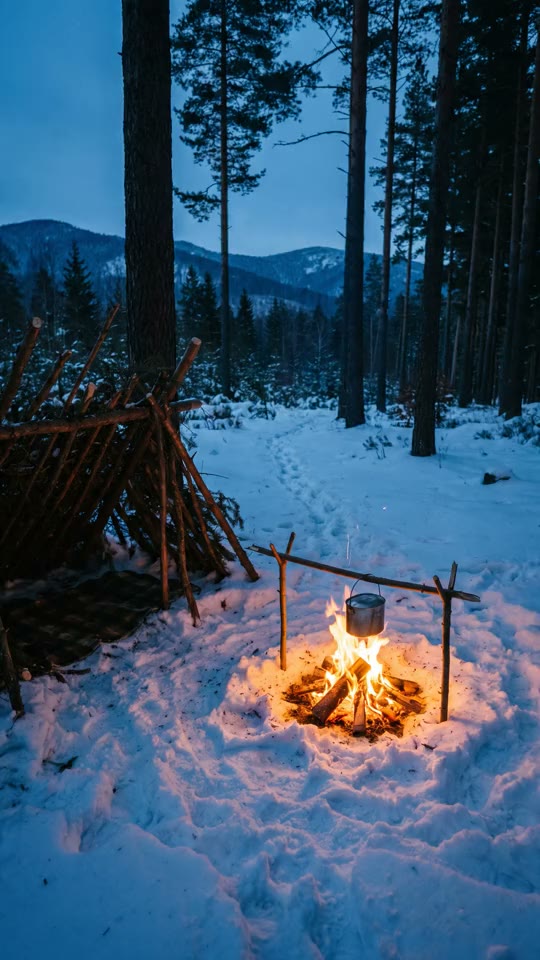
Pick the danger: a rip current, a lightning storm, a car stuck in snow. You get a narrated vertical Short that names the first move, the next ones in order and the mistake most people make.
Example made for this page. Yours is made new from your idea.
Ideas you can make today
Each one opens the studio with the idea typed in. Nothing is charged until you press the button with the price.
- What to do if you get caught in a rip currentMake this
- How to get out of a car that is sinkingMake this
- The safest place to stand when lightning is closeMake this
- What to do in the first hour of being lost on a hikeMake this
- How to signal a rescue plane with what is in your bagMake this
- What to do if your car gets stuck in deep snowMake this
Four parts of a survival lesson
01
The danger
Name the situation and the instinct that makes it worse: never fight a rip current.
02
First move
The one action that buys time, said as a short command.
03
Then
The next steps in order, numbered out loud so they stick.
04
Before next time
How to spot the danger before it starts, then back to the opening line.
From idea to survival video in four steps
Describe it
One sentence is enough. Pick an idea from the list above, or write your own survival video idea in the web studio or in a chat with Claude or ChatGPT.
Read the script, if you want to
In a chat, the script and its virality score always come back first, and you can change any line. On the web, Write script shows it before you make the video, or Create video writes and makes it in one go.
Say yes to the price
The credit price is on the button, or in the chat. Nothing is charged before you agree, and a failed render returns its credits.
Download and post
Remake one scene if it misses, then download the vertical MP4 and post it on your own channel.
A sample script and its virality score
The scorer FacelessWave runs on every script in the chat before the price, applied to the script below when this page was built. It scores the writing (hook, promise, loop, length and the script itself), not future views. Score your own script
- 1Never fight a rip current. Know your 3 moves?
- 2A rip is a narrow strip of water rushing out from the beach, sometimes faster than an Olympic swimmer.
- 3Swimming straight back against it wears out even strong swimmers.
- 4First, flip onto your back and float, so you save your strength.
- 5Second, wave and shout until a lifeguard or someone on the sand sees you.
- 6Third, swim parallel to the shore until you are out of the strip, then angle back in.
- 7Before you go in, look for a calm, darker gap in the breaking waves.
- 8Flip, float, then follow the shore: that is how you get out of a rip current.
100out of 100
- Hook40 of 40
- Promise15 of 15
- Loop15 of 15
- Length15 of 15
- Script15 of 15
The scorer has no fixes for this script.
Or ask for it in a chat
With the FacelessWave connector added to Claude or ChatGPT, this message starts the same video. The script and its score come back first; the Short is made after your yes and lands in the same library.
“Make a 30 second survival Short on what to do if a rip current pulls you out, three steps in order. Show me the script and its score first.”
Teach the counterintuitive step first
The survival tips people remember are the ones that go against instinct. Do not swim straight for the beach. Do not wait for a sinking car to fill up before you open the window. A Short that opens on the wrong instinct gives the viewer a reason to stay for the right one.
Then give the steps as numbered commands. First, second, third works better than a paragraph, because each line becomes its own scene and the viewer can picture each action.
What the scorer checks on a how to survive script
This format uses the question hook rules. The 40 hook points go to an opening line that is short, names the danger in its first words, asks, holds a number, speaks to the viewer and uses a word like never. “Never fight a rip current. Know your 3 moves?” earns all 40.
The loop part wants the last line to share a word with the first, which a survival Short does naturally when it ends on the danger again. The script part checks for broken lines and for one word repeated through most of the middle lines; that is why the sample says first, second and third instead of starting four lines with the same word.
Scenes that show the action, not the panic
Describe what the viewer should see at each step: a swimmer on their back looking at the sky, an arm waving above the water, a line of calm water between the waves. Clear actions read better on a phone than chaos.
Cinematic is the default and suits most outdoor dangers. Vintage film works for old expedition stories told as lessons. The storyteller voice or the professor keeps the tone steady.
Changing a step after the video is made
If a scene shows the wrong action, such as a swimmer heading straight for the beach, remake that one scene at its own price. Captions, music and transitions change in the editor for no credits. Download the vertical MP4 and post it yourself once every step looks right.
Questions about survival videos
More questions? support@facelesswave.com
Read before you make one
 How to write a YouTube Shorts script: two drafts taken from a low score to the topWe wrote two bad Shorts scripts on purpose, scored them, and fixed one part at a time until each reached the top of the scale. Every number here comes from FacelessWave's own scorer, and you can paste the same lines into the checker to see them.
 Twelve faceless niches for Shorts, judged on ideas, hooks, risk and costA niche is worth picking when it can fill a year of videos with openings people stop for. This guide rates twelve faceless niches on that, plus the policy risk and the cost of each video.
 YouTube Shorts not getting views: a diagnosis in three layers, the file, the script and the numbersLow views have a short list of causes, and most leave a trace you can find in YouTube Studio. This guide sorts them into three layers, gives the check for each, and is honest about the part no creator controls.
More formats to try
- Painted stickman
- Reddit stories
- AI stories
- History
- Motivation
- Fun facts
- What if
- True crime
- 3D explainers
- Luxury and money
- Animals
- Travel and places
- Food and ASMR
- Riddles and brain teasers
- Life hacks
- Space
- Psychology facts
- Myths debunked
- AI stickman
- Painted stickman
- Fruit dramas
- Talking objects
- History POV
- Kids rhymes
- Scary stories
Start with one idea and read its score.
Writing the script costs no credits; the video is made after you agree to its price.