Space video makerThe strangest places in the universe, one fact at a time
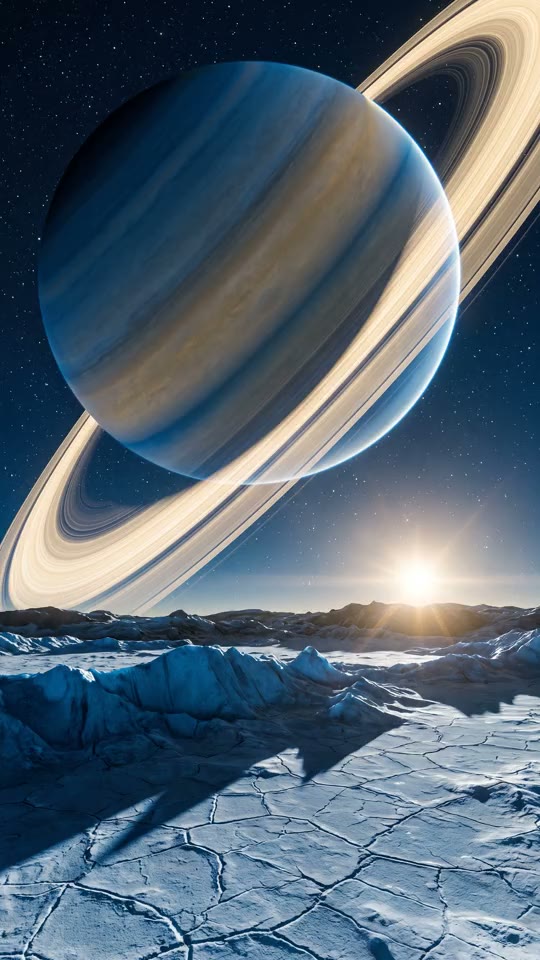
Pick a planet, a moon or a black hole and the fact about it that sounds wrong. You get a narrated vertical Short with a picture for every step, captions burned in and a last line that loops to the first.
Example made for this page. Yours is made new from your idea.
Ideas you can make today
Each one opens the studio with the idea typed in. Nothing is charged until you press the button with the price.
- Why the Sun rises in the west on VenusMake this
- The moon of Saturn with lakes of liquid methaneMake this
- How long it would take to drive to the MoonMake this
- What you would weigh on every planetMake this
- The planet where it may rain diamondsMake this
- Why footprints on the Moon can last for millions of yearsMake this
Four steps from fact to wonder
01
The odd fact
Open on the claim that sounds impossible: a day on Venus lasts longer than its year.
02
The numbers
Two figures side by side, said in plain words the viewer can hold.
03
The reason
Why it happens, in one sentence: Venus turns very slowly, and the other way round.
04
The return
Come back to the opening fact, now that it makes sense.
From idea to space video in four steps
Describe it
One sentence is enough. Pick an idea from the list above, or write your own space video idea in the web studio or in a chat with Claude or ChatGPT.
Read the script, if you want to
In a chat, the script and its virality score always come back first, and you can change any line. On the web, Write script shows it before you make the video, or Create video writes and makes it in one go.
Say yes to the price
The credit price is on the button, or in the chat. Nothing is charged before you agree, and a failed render returns its credits.
Download and post
Remake one scene if it misses, then download the vertical MP4 and post it on your own channel.
A sample script and its virality score
The scorer FacelessWave runs on every script in the chat before the price, applied to the script below when this page was built. It scores the writing (hook, promise, loop, length and the script itself), not future views. Score your own script
- 1Why does 1 day on Venus outlast its year?
- 2Venus takes 243 Earth days to spin around once.
- 3But it circles the Sun in only 225 Earth days.
- 4So the planet finishes a lap of the Sun before it finishes a single turn.
- 5It also spins the other way, so the Sun rises in the west.
- 6From one sunrise to the next takes about 117 of our days.
- 7You would never see it, because the clouds are thick acid and the ground is hot enough to melt lead.
- 8So on Venus, a year comes around faster than a day.
98out of 100
- Hook38 of 40
- Promise15 of 15
- Loop15 of 15
- Length15 of 15
- Script15 of 15
The scorer has no fixes for this script.
Or ask for it in a chat
With the FacelessWave connector added to Claude or ChatGPT, this message starts the same video. The script and its score come back first; the Short is made after your yes and lands in the same library.
“Make a 30 second space Short on why one day on Venus lasts longer than its year, with the real numbers. Show me the script and its score first.”
Start with the fact that sounds like a mistake
A space Short works when the first line makes the viewer think the narrator got it wrong. A day longer than a year. A moon with rivers that are not water. Footprints that outlive civilisations. The rest of the video is there to prove it.
Avoid openers that list size or distance with nothing strange attached. “Jupiter is very big” is a fact, but it asks no question. “Jupiter could fit every other planet inside it, with room left over” makes people wait for the proof.
Numbers a viewer can picture
Space is full of figures too large to feel. Say each one once, then turn it into something familiar: 243 Earth days is about eight months. Hot enough to melt lead says more than 465 degrees Celsius.
Keep to two or three numbers per Short. On this format the question hook rules apply: the first line scores best when it is about eight words or fewer, names the planet early, carries a number, asks something and has a word like why or never. The sample above opens on a nine word question that names Venus, carries a number and asks why, and its last line returns to Venus, which earns the loop points.
Looks for deep space and planet surfaces
The default Vivid look gives saturated nebula colours and glowing planets. Cinematic slows things down for black holes and the edge of the solar system. Low poly and Isometric diorama work well for explaining orbits, since the planets read as models.
The professor suits careful explanations, and the storyteller suits the eerie ones. Space Shorts rarely show people, so the AI label only matters if your script puts an astronaut on screen in a realistic look.
Fixing one shot without starting over
If the scene for Saturn shows rings on the wrong planet, remake that one scene at its own price from the editor. Captions, transitions and music can be changed there too, and those edits cost no credits.
Questions about space videos
More questions? support@facelesswave.com
Read before you make one
 How to make what if videos: pick the question, chain the consequences, score the scriptA what if Short asks one impossible question and answers it in a chain of consequences. This guide builds a 30 second chain, scores it, and shows which single line decides most of the score.
 How to make AI videos for YouTube: one idea followed all the way to the uploadThis guide follows one idea, why your stomach growls, from a typed question to a vertical MP4 ready for YouTube, with the script scores, the price and the checks to run before you upload.
 How long should a YouTube Short be? The limit, the one minute catch and how to cutYouTube lets a Short run for three minutes. That is a ceiling, and most stories are better well under it. Below are the rules that set the limits, the one that blocks longer Shorts with claimed music, and a script cut from a padded draft to a tight one, with before and after scores.
More formats to try
- Painted stickman
- Reddit stories
- AI stories
- History
- Motivation
- Fun facts
- What if
- True crime
- 3D explainers
- Luxury and money
- Animals
- Travel and places
- Food and ASMR
- Riddles and brain teasers
- Life hacks
- Psychology facts
- Survival tips
- Myths debunked
- AI stickman
- Painted stickman
- Fruit dramas
- Talking objects
- History POV
- Kids rhymes
- Scary stories
Start with one idea and read its score.
Writing the script costs no credits; the video is made after you agree to its price.